How to Insulate a Garage Door for Tennessee Winters
Insulating your garage door for a Tennessee winter means picking the right R-value, sealing air gaps, and knowing when a pro install beats a DIY kit.
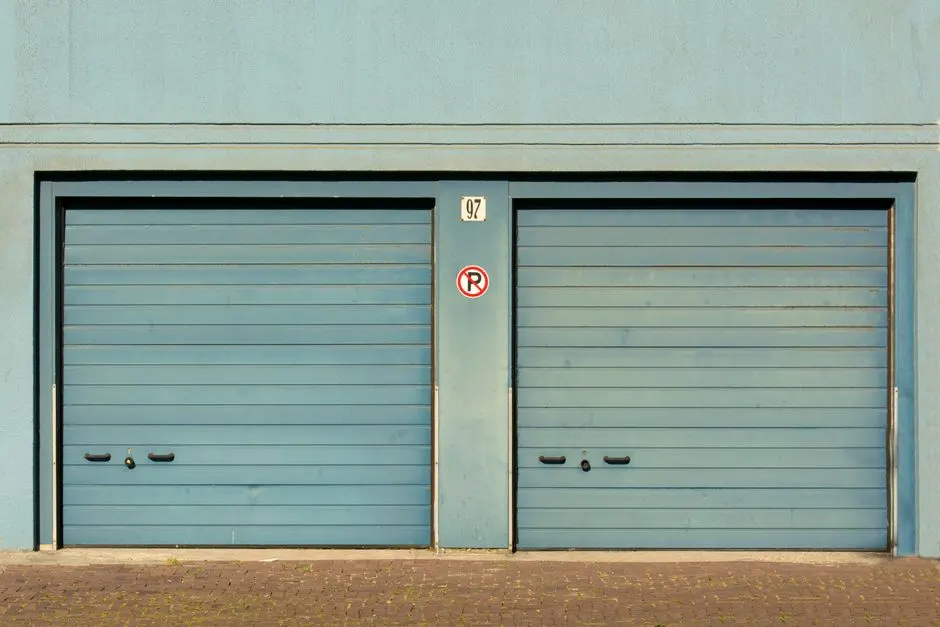
Insulating a garage door for a Tennessee winter means adding a radiant barrier or foam board to the inside of the door panels, sealing the perimeter with weatherstripping, and choosing an R-value between R-8 and R-16 depending on whether the garage is attached or detached. In Hermitage, where January lows regularly dip to 28°F and occasional single-digit nights push through, that insulation stops the garage from becoming a 40-degree heat sink that pulls warmth out of your kitchen and laundry room. This guide covers the materials, the actual steps, current pricing, and the mistakes that waste a weekend.
Why Insulate a Garage Door in Hermitage Before Winter
An uninsulated single-car garage door has an R-value of about R-1 - roughly the same as a sheet of cardboard. An attached garage shares at least one wall and often a ceiling with the living space, so every degree of heat that escapes through that door is heat your HVAC system has to replace.
We see this in Hermitage homes built between 1985 and 2005, particularly the subdivisions off Andrew Jackson Way and around Tulip Grove. Those houses were framed with the garage as a buffer zone, not a conditioned space, and the shared wall usually has minimal insulation. When the door is bare steel or thin wood, the garage sits within 5 to 8 degrees of outdoor temperature. Insulate the door and seal the gaps, and that gap closes to 15 or 20 degrees above outdoor - which is the difference between a cold storage room and a usable workspace.
There is a second reason that matters just as much: moisture. Tennessee winters swing between 25°F nights and 55°F afternoons. That freeze-thaw cycle pulls condensation onto cold metal door panels. Over a season, that moisture rusts hinges, stiffens rollers, and works into the bottom section where the panel meets the threshold. Insulation keeps the panel surface closer to indoor temperature, which cuts the condensation cycle dramatically.
What R-Value Do You Actually Need in Tennessee?
For an attached garage in Hermitage, aim for R-8 to R-12 on the door itself. For a detached garage or a workshop you heat occasionally, R-6 to R-8 is enough. If the garage sits under a bonus room or shares a wall with a bedroom, go to R-13 or higher.
R-value measures resistance to heat flow. Nashville-area climate zone 4 falls in the middle of the national map - we are not Minnesota, but we are not Florida either. The U.S. Department of Energy recommends R-13 to R-19 for garage ceilings in this zone and R-5 to R-10 for the door. In practice, most Hermitage homeowners land at R-8 or R-9 because that is what a 1-inch foam board kit delivers without adding so much weight that the opener strains.
Weight is the number nobody talks about. A standard 16x7 steel door weighs about 130 pounds. A full foam-board kit adds 15 to 25 pounds. That is fine for a 1/2-horsepower opener. Add a reflective foil layer plus foam plus a second panel and you can push 40 pounds, which is where springs and openers start to complain. If your door already feels heavy when you lift it by hand, insulate first and then have the springs checked.
Best Garage Door Insulation for Hermitage Tennessee
The best garage door insulation for Hermitage is a rigid foam board kit with a reflective facing, cut to fit the door's panel cavities. That combination gives you R-8 to R-10, weighs less than 25 pounds for a double door, and handles Tennessee humidity without sagging.
Here is how the common options compare:
- Reflective foil (radiant barrier) alone: R-1 to R-3. Cheap, light, easy. Good for a detached garage in mild months. Not enough for an attached garage in January.
- Fiberglass batt: R-11 to R-13. Effective, but it holds moisture. In a Hermitage garage that sees condensation, batt insulation can turn into a wet sponge against the door panel.
- Rigid foam board (EPS or polyiso): R-4 to R-6 per inch. The standard choice. Cut to fit, friction-fit into the panel, no adhesive needed in most doors.
- Foam board with reflective facing: R-8 to R-10. The best balance of cost, weight, and performance for this climate.
- Factory-insulated door: R-12 to R-18. The permanent answer if the door is 15+ years old and due for replacement anyway.
If you are already considering a new door, factory insulation is baked into the panel and will outperform any add-on kit. Our team handles garage door insulation Hermitage installs on existing doors and can tell you in one visit whether a retrofit or a replacement makes more financial sense for your house.
How Do I Insulate My Garage Door for Tennessee Winters in Hermitage?
To insulate your garage door yourself, measure each panel cavity, cut foam board 1/4 inch oversize, press it into the panel, then seal the door's perimeter and bottom with new weatherstripping. Plan on 2 to 4 hours for a single door, 4 to 6 for a double.
Here is the sequence we use:
- Measure each panel cavity. Do not assume they are identical. On a 16x7 door, the top and bottom sections are often 1/2 inch different from the middle ones.
- Clean the panels. Wipe down the inside with a damp rag and let them dry. Foam board sticks better and sits flatter on clean steel.
- Cut the board. Score with a utility knife, snap, and trim. A 1/4-inch oversize cut holds itself in place by friction.
- Fit the panels. Press each piece into its cavity. On doors with horizontal struts, work around the strut rather than cutting through it.
- Seal the perimeter. Replace the bottom rubber seal and the side and top weatherstripping. This is where most of the cold air actually enters.
- Test the door. Run it up and down twice. Listen for scraping. If the door feels heavier, have the springs checked before you run it another 50 cycles.
The perimeter seal matters more than most people expect. A 16-foot door with a 1/4-inch gap along the bottom and both sides has the equivalent of a 6-square-inch hole straight to the outdoors. New weatherstripping costs $30 to $60 and takes 30 minutes. Our garage door weather sealing Hermitage service handles the full perimeter and threshold in one visit if you would rather not climb a ladder in December.
Garage Door Insulation Cost in Hermitage
Typical 2026 pricing in Hermitage runs $150 to $400 for a DIY foam board kit on a single door and $250 to $600 for a double, depending on R-value and door size. Professional installation with weather sealing runs $350 to $900 for a single door and $600 to $1,400 for a double.
Here is what drives the range:
- Door size: A single 8x7 or 9x7 door uses about half the material of a 16x7 double.
- R-value: R-8 foam board costs roughly 30% more than R-5 of the same thickness.
- Panel style: Raised-panel doors take more cutting time than flush doors. Carriage-style doors with deep recesses take the most.
- Weather sealing: Add $80 to $200 if the perimeter and bottom seal are replaced at the same time.
- Spring adjustment: Add $150 to $300 if the added door weight requires a torsion spring re-tension or replacement.
For comparison, a new factory-insulated door installed runs $1,200 to $3,500 depending on size and style. If your current door is 20 years old and showing rust at the bottom section, the math often favors replacement over retrofitting. We walk Hermitage homeowners through that decision with no pressure - see what we offer on garage door installation Hermitage.
Common Mistakes to Avoid
The most common mistake is sealing the door so tightly that the garage cannot breathe. Garages need some ventilation, especially in a Tennessee climate where humidity sits above 70% for weeks at a time. If you seal every gap and the garage has no vent, you trap moisture and grow mold on the shared wall.
Other mistakes we see on service calls:
- Using fiberglass batt against the door panel. It compresses, holds condensation, and loses most of its R-value within one season.
- Ignoring the springs. Adding 20 to 30 pounds to a door that was balanced for a bare panel is the fastest way to snap a torsion spring in January.
- Cutting foam board too small. Gaps between the board and the panel frame let air circulate behind the insulation, which defeats the purpose.
- Forgetting the bottom seal. The bottom rubber is the single largest air leak on most doors. Replace it every 3 to 5 years.
- Insulating a door that is already failing. If the door is off-track, has a broken cable, or a cracked panel, fix that first. Insulation does nothing for a door that will not close flush.
If your door is binding, dragging, or making a grinding noise, that is a mechanical problem, not an insulation problem. Our garage door repair Hermitage team handles springs, cables, rollers, tracks, and panels - usually same-day.
When to Call a Professional
Call a professional if your door is over 10 years old, if it uses torsion springs, if it has any existing mechanical issue, or if you simply do not want to spend a Saturday on a ladder in 35-degree weather. Torsion springs are under extreme tension and cause serious injuries every year when homeowners try to adjust them without the right tools.
We also get calls from Hermitage homeowners who tried a DIY kit and ended up with a door that will not close because the added weight threw off the opener's travel limits. That is a 20-minute fix for us and a frustrating afternoon for you.
Akins Garage Door Service has worked on doors across Hermitage for years - from the older homes near Hermitage Hills to the newer builds off Dodson Chapel. We quote the work upfront, do it in one visit when parts allow, and test the door before we leave. If insulation is not the right answer for your garage, we will tell you that too.
Frequently Asked Questions
How do I insulate my garage door for Tennessee winters in Hermitage?
Measure each panel cavity, cut rigid foam board 1/4 inch oversize, press it into the panel, then replace the bottom seal and perimeter weatherstripping. A single door takes 2 to 4 hours and $150 to $400 in materials. Seal the perimeter - that is where most cold air enters.
What is the best garage door insulation for Hermitage?
Rigid foam board with a reflective facing, rated R-8 to R-10, is the best fit for Hermitage. It handles Tennessee humidity without holding moisture, adds only 15 to 25 pounds to the door, and costs $150 to $600 depending on door size. Avoid fiberglass batt, which traps condensation.
Can I insulate my garage door myself in Hermitage?
Yes, if your door is under 10 years old and has no mechanical issues. The job is measuring, cutting, and fitting foam board plus new weatherstripping. Do not attempt it if the door has torsion springs that need adjustment or if the door already feels heavy when you lift it by hand.
How much does garage door insulation cost in Hermitage?
DIY kits run $150 to $400 for a single door and $250 to $600 for a double in 2026. Professional installation with weather sealing runs $350 to $900 for a single and $600 to $1,400 for a double. Add $150 to $300 if springs need re-tensioning after the added weight.
Does garage door insulation help in Tennessee winters?
Yes. An insulated door keeps an attached garage 15 to 20 degrees warmer than an uninsulated one, which reduces heat loss into the garage and lowers HVAC load. It also cuts condensation on cold metal panels, which prevents rust on hinges, rollers, and the bottom section.
Get Help with Garage Door in Hermitage
If you want your garage door insulated and sealed before the first hard freeze, we can handle it in one visit. Call Akins Garage Door Service at (615) 481-3508 and we will give you a straight answer on whether a retrofit kit or a new insulated door is the better spend for your house.